How to Choose Heavy Duty Racks for Your Warehouse

Time:2026-11-12 Author:Charlotte
0%

Choosing Heavy Duty Racks is not just a matter of finding the tallest frame or the lowest price. It is a decision about loads, equipment, space, and daily work. Management thinker Peter Drucker’s well-known line, “Efficiency is doing things right; effectiveness is doing the right things,” offers a useful lens: the right rack system must fit the warehouse’s real tasks, not just its floor plan.

Start with the details on the pallet. Record the heaviest load, its dimensions, and how evenly its weight is distributed. A bulky pallet that overhangs a beam can create problems even when its total weight seems acceptable. Check forklift aisle width, clear height, floor condition, and sprinkler clearance, too. Small measurements matter. A few inches can affect access or capacity.

This guide explains how to compare rack types, confirm load requirements, and plan a layout that supports safe, practical operations. It also considers what is easy to overlook: future inventory changes, visible beam damage, and whether workers can reach products without awkward maneuvers. A rack may look solid. That alone proves little. Verify specifications with the manufacturer or a qualified storage-system professional, and treat capacity labels as essential—not decorative. No single design suits every warehouse. The best choice is the one that fits documented loads, equipment, and workflow, with room for careful review.
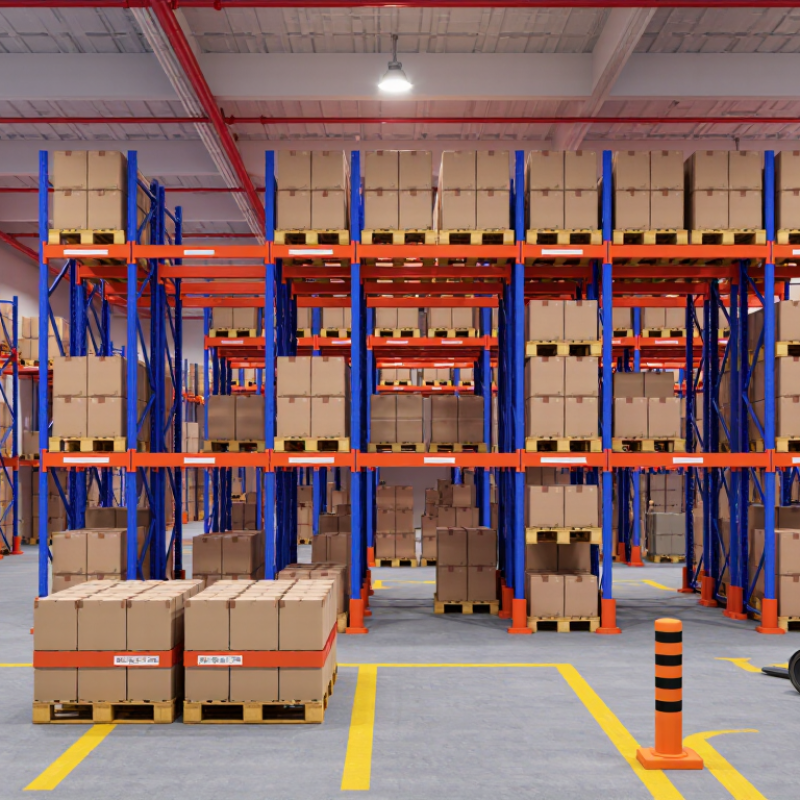
How to Choose Heavy Duty Racks for Your Warehouse

Measure pallet loads and specify rack capacity per ANSI/RMI MH16.1

Measure the heaviest loaded pallet, not the daily average. Include the pallet, packaging, and product; weigh several units if loads vary. Record pallet width, depth, height, and where the weight sits. A 1,000-pound load centered on a pallet behaves differently from the same weight stacked unevenly. Small details matter. BLS’s 2022 Industry Injury and Illness Data reported 4.8 total recordable cases per 100 full-time workers in warehousing and storage. That is not a rack-failure rate, but it is a useful reminder that safe handling deserves attention.

Use those measurements to specify capacity for the actual rack configuration. ANSI/RMI MH16.1, Specification for the Design, Testing and Utilization of Industrial Steel Storage Racks, provides the engineering framework. Check beam capacity at each level and frame capacity for the planned beam elevations and bracing. Confirm how the manufacturer defines beam ratings; a rating for a uniformly distributed load may not cover a concentrated or off-center load. Leave room for seasonal weight changes. One uncomfortable check: the first estimate may be wrong. Reweigh the heaviest pallets, then have a qualified rack designer review the layout, floor conditions, and load plaques before installation.

Choose rack type based on SKU count, access needs, and turnover

Start with SKU count, then ask how often each pallet must be reached. Selective pallet racks suit warehouses with many SKUs and frequent picking because every pallet position remains accessible. If a few products move in large, steady batches, drive-in or push-back layouts can store them more densely. For fast-moving goods that need orderly rotation, pallet-flow lanes may help, but confirm the layout matches your inventory process.

Tips: Map a busy aisle during a real shift. Note pallet sizes, forklift turning space, and replenishment delays. Compare daily picks with storage density, not just the rack footprint. Measure twice. A layout that looks efficient on paper may slow operators at peak hours.

Turnover should shape access, too. High-turnover SKUs often benefit from direct access; slow movers may fit in denser locations if retrieval remains practical. Before choosing heavy-duty racks, verify pallet and beam loads, floor condition, ceiling height, and equipment limits with a qualified rack professional. Leave room for guards and inspections. Forecasts are imperfect, so avoid designing around one unusually busy week. It is easy to prioritize capacity and overlook travel time; the right balance is not always obvious.

Set aisle widths to suit forklift dimensions and turning requirements

For a heavy-duty warehouse rack layout, aisle width must match the actual forklift, not a catalog sketch. Measure the truck’s overall width, load width, fork length, and turning radius with a typical pallet. A long load can swing beyond the truck’s body during a turn. Allow room for steering corrections, rack guards, and floor-level obstructions. The minimum aisle figure is only a starting point; loaded travel needs space too. Small margins matter. Confirm measurements against the forklift’s operating data and the planned rack layout.

Tips: Tape the proposed aisle edges on the floor, then drive through with a representative load. Check both turning directions and approaches at rack ends. If the operator needs repeated corrections, widen the aisle or adjust the rack arrangement. Test before drilling.

Even a few centimeters can affect whether a pallet enters squarely or clips an upright. Record the truck details, load dimensions, and clearances so later changes can be checked. Recheck after changing attachments, pallet sizes, or traffic patterns; these details are easy to overlook. A layout that works with an empty truck may feel tight during a busy shift. There is no perfect number for every warehouse, and early measurements can be wrong. Review trial runs and operator feedback before fixing bay positions.

How to Choose Heavy Duty Racks for Your Warehouse — Set Aisle Widths to Suit Forklift Dimensions and Turning Requirements

Forklift Configuration Typical Clear Aisle Width Typical Operating Conditions Turning and Load Considerations Rack Layout Guidance
Counterbalance forklift 3.7–4.0 m (12–13 ft) General-purpose handling with open turning space and direct access to pallet positions. Allow for the truck’s overall length, rear-end swing, pallet overhang, and the load’s turning path. Suitable for conventional selective pallet racks where flexibility and straightforward access are priorities.
Reach truck 2.7–3.0 m (9–10 ft) Indoor pallet storage with a narrower working aisle than a typical counterbalance truck. Check the truck’s right-angle stacking requirement at the intended lift height and with the actual pallet load. Often paired with selective racks to increase storage density while preserving access to individual pallets.
Articulated forklift About 1.8–2.2 m (6–7 ft) Narrow-aisle operations where the truck is designed to turn and place loads within restricted aisles. Turning geometry varies by truck and load; verify clearance at rack ends, cross-aisles, and aisle intersections. Can support higher storage density, but aisle-end layout and operator clearance need careful planning.
Very-narrow-aisle turret or man-up truck About 1.5–1.8 m (5–6 ft) Purpose-designed, guided or controlled narrow-aisle operation. The truck may not turn within the storage aisle; confirm guidance, end-of-aisle access, and load dimensions. Use only with compatible equipment and a layout designed around its operating method and clearances.
Walkie pallet truck About 2.1–2.4 m (7–8 ft) Floor-level pallet movement and loading or replenishment in compact areas. Turning space depends on truck length, handle position, and pallet size; this equipment is generally not used for elevated rack storage. Plan clear approaches to floor-level storage and staging areas; use suitable lift equipment for rack access.

Planning note: These aisle widths are typical planning ranges, not guaranteed minimums. Confirm the required working aisle with the forklift supplier using the truck’s turning or right-angle stacking data, pallet dimensions, load overhang, lift height, and site clearances. Also verify rack capacity, floor conditions, and applicable safety requirements before installation.

Check sprinkler clearance: NFPA 13 commonly requires 18 in. below deflectors

When choosing heavy-duty warehouse racks, check sprinkler clearance before fixing beam heights. NFPA 13 commonly calls for at least 18 inches between sprinkler deflectors and stored goods. Measure to the top of the load, not just to the rack beam. Measure it. Pallets can bulge, cartons can shift, and a load that clears today may not clear after restocking.

Treat the 18-inch figure as a planning baseline, not a universal answer. Requirements can depend on the sprinkler system, storage arrangement, and locally adopted code. Confirm the applicable design with a qualified fire protection professional or the authority having jurisdiction. A rack layout may look tidy on paper and still conflict with sprinkler coverage in the actual building. That is easy to miss.

Leave room for real operating habits. Mark maximum storage heights on rack uprights, and train lift-truck operators to keep loads below those marks. Check clearance after seasonal inventory changes, not only during installation. A tape measure and a walk-through help, but they do not replace a review of the sprinkler design. If a beam must move, reassess load capacity and anchoring too; changing one detail can affect the whole rack bay.

Plan secure storage and clear aisles under OSHA 29 CFR 1910.176

When choosing heavy-duty racks, start with the loads: record each pallet’s weight, dimensions, and expected placement. OSHA 29 CFR 1910.176 requires stored materials not to create hazards and calls for safe clearances where mechanical handling equipment operates. It also requires aisles to be appropriately marked. The rule does not set one universal aisle width or rack capacity, so match the layout to your equipment, loads, and site conditions.

Leave enough room for a forklift to turn without clipping rack uprights or squeezing past pedestrians. Check clearances at doorways, dock approaches, and aisle ends—not just in a floor plan. Store loads so they remain stable; uneven pallets or overhanging cartons can shift during handling. Mark permanent aisles, keep them free of staged goods, and make rack load information easy for staff to find. Small details matter. A layout may look spacious on paper and still pinch a turning forklift. Recheck clearances after equipment or inventory changes, and inspect for bent uprights, loose anchors, or damaged beams. That check can be easy to postpone. Don’t.

How to Choose Heavy-Duty Racks for Your Warehouse

Plan secure storage and clear aisles under OSHA 29 CFR 1910.176.

How to read this chart: A value of 1 means the topic is explicitly addressed by OSHA 29 CFR 1910.176; it is not a compliance score or a measurement. The standard does not set one universal aisle width or rack capacity. Select racks for the actual loads, handling equipment, and site conditions, and keep aisles clear and permanent aisles marked.

FAQS

How should aisle width be chosen for a heavy-duty rack layout?

Measure the forklift’s width, load width, fork length, and turning radius with a typical pallet. A catalog sketch is not enough.

Why can a loaded forklift need more room than an empty one?

Long loads may swing beyond the truck during turns. Even a few centimeters can make a pallet clip an upright.

How can a proposed aisle layout be tested?

Mark the aisle edges with floor tape and drive through with a representative load. Test both turning directions and approaches at rack ends. Test it first.

What should operators do if turns require repeated corrections?

Widen the aisle or adjust the rack arrangement. Repeated corrections are a warning, not just an inconvenience.

Which areas need clearance checks?

Check doorways, dock approaches, and aisle ends, along with the main travel lanes. A floor plan can miss tight spots.

How should pallet loads be stored?

Record each pallet’s weight, dimensions, and planned position. Keep loads stable; uneven pallets and overhanging cartons can shift.

What helps keep warehouse aisles safe and usable?

Mark permanent aisles clearly and keep them free of staged goods. Make rack load information easy for staff to find.

When should aisle clearances and rack conditions be reviewed?

Recheck after changes to forklifts, attachments, pallet sizes, inventory, or traffic patterns. Inspect for bent uprights, loose anchors, and damaged beams. It is easy to postpone this check. Don’t.

Conclusion

Choosing Heavy Duty Racks starts with understanding the loads your warehouse needs to support. Measure pallet weights and dimensions, account for how loads will be distributed, and specify rack capacity in accordance with ANSI/RMI MH16.1. Then select a rack configuration that fits your SKU count, access requirements, and inventory turnover. The right layout should make frequently handled products easy to reach while using available space efficiently.

Plan aisle widths around the forklifts in use, including their dimensions and turning needs. Check that the rack layout maintains required clearance beneath sprinkler deflectors; NFPA 13 commonly specifies 18 inches. Finally, plan secure storage practices and keep aisles clear to support safe material handling under OSHA 29 CFR 1910.176. Careful planning helps create a warehouse storage system that is practical, accessible, and suited to daily operations.

Charlotte

Charlotte

Charlotte is a seasoned marketing professional with a deep understanding of the company's portfolio and a passion for elevating its presence in the market. With a keen eye for detail and a commitment to excellence, she ensures that our professional blog is regularly updated with insightful articles......