Storage decisions affect more than available floor space. They shape picking speed, product protection, and how safely a team moves through a busy work area. Stackable Storage can help businesses use vertical space, but the right choice depends on what each container will hold and how often staff need access. A box that looks sturdy on a shelf may be difficult to lift when full. Fit matters.
Start by measuring shelves, aisles, doorways, and the items being stored. Compare container dimensions and confirm stacking limits in the manufacturer’s product documentation. Consider material, ventilation, lid style, and resistance to dust or moisture. Heavy goods may need rigid bins with reinforced bases; frequently handled small parts may be easier to manage in open-front containers. Check whether matching units lock or nest securely, and leave room for labels that remain visible when stacked.
Daily routines matter, too. Think about who will retrieve the contents, how often stacks may change, and whether carts or shelving must accommodate the chosen sizes. A consistent system can simplify inventory checks, though one size rarely suits every product. That is easy to overlook. Before ordering in bulk, test a small group with realistic loads and normal handling. Watch for awkward lifting, blocked labels, or unstable stacks. These practical checks help businesses choose storage that fits their workspace, their products, and the way their team actually works.
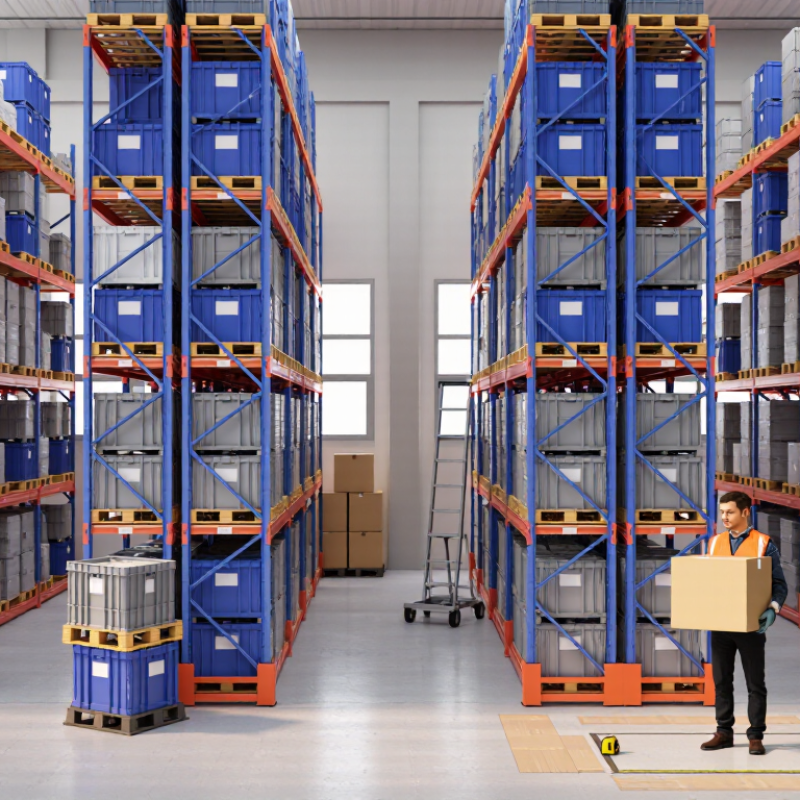
Define Load, Turnover, and Storage Conditions Before Selecting Stackable Units
Before selecting stackable units, record the weight and shape of the goods each unit will hold. Check the rated capacity for both individual units and the complete stack. Weight distribution matters too: dense parts placed at one edge can make a stack unstable. Leave a sensible margin below the stated limit, especially when loads vary between shifts. A tidy spreadsheet does not always match a rushed loading bay.
Turnover affects the right design. Frequently picked items need clear labels and easy access, while slower-moving stock can usually sit higher or farther back. Note how workers move goods: by hand, cart, or forklift. Then check aisle width, stack height, and whether a full unit can be removed without shifting others. It sounds obvious. It is easy to miss.
Storage conditions deserve the same attention. Measure the actual area and consider moisture, dust, temperature changes, and cleaning routines. These can affect materials, labels, and product condition over time. If the floor is uneven, test stability before building a full stack. A small trial with typical loads may expose awkward handling or poor visibility. Plans are useful, but warehouse routines rarely stay perfectly neat.
Match Container Footprints to ISO 6780 Pallet Sizes, Including 1,200 × 1,000 mm
How to Choose Stackable Storage for Your Business?
Match Container Footprints to ISO 6780 Pallet Sizes, Including 1,200 × 1,000 mm
A stackable container should fit the pallet, not just the shelf. ISO 6780 includes common pallet footprints such as 1,200 × 1,000 mm and 1,200 × 800 mm. Check the container’s outside dimensions and compare them with the pallet’s usable deck area. A neat layout can reduce wasted space and make loads easier to move. Avoid overhang, which may leave edges exposed to bumps or shifting. Also consider the container’s loaded weight, stack height, and access to handles. Small differences matter. A few millimetres can affect how rows sit together, especially when containers have tapered walls.
Tips: Sketch the pallet from above and draw each container footprint to scale. Leave room for handling, then test the layout with real containers and typical contents. Measure twice; warehouse floors are not always perfectly level.
One detail is easy to miss: a footprint that fits may still block pallet openings or make the load unstable. Check how the pallet will be lifted and secured, and confirm that stacked containers remain aligned under realistic loads. If your team stores several product sizes, trial a mixed layout before ordering in volume. That test may reveal an awkward gap—or a better arrangement you had not planned.
How to Choose Stackable Storage for Your Business? — Match Container Footprints to ISO 6780 Pallet Sizes, Including 1,200 × 1,000 mm
Compare example container footprints with the six ISO 6780 pallet sizes below. “Units per layer” shows a simple, uniform, no-overhang grid; it is an illustrative footprint comparison, not a guarantee of maximum mixed-orientation packing.
| ISO 6780 pallet footprint (mm) |
Example container footprint (mm) |
Simple grid layout |
Containers per layer |
Pallet deck area used |
Practical selection note |
| 1,200 × 1,000 |
600 × 400 |
2 × 2 |
4 |
20.0% |
Leaves substantial deck area between containers. |
| 400 × 300 |
3 × 3 |
9 |
90.0% |
Close-fitting grid with limited unused deck area. |
| 300 × 200 |
4 × 5 |
20 |
100.0% |
Footprint tiles the pallet deck exactly in this grid. |
| 1,200 × 800 |
600 × 400 |
2 × 2 |
4 |
100.0% |
Exact deck coverage in a simple grid. |
| 400 × 300 |
3 × 2 |
6 |
75.0% |
Allows a regular layout while leaving some deck area clear. |
| 300 × 200 |
4 × 4 |
16 |
100.0% |
Exact deck coverage in this grid. |
| 1,219 × 1,016 |
600 × 400 |
2 × 2 |
4 |
77.5% |
Check pallet deck dimensions and clearances at the actual site. |
| 400 × 300 |
3 × 3 |
9 |
87.2% |
Good area use in a uniform grid. |
| 300 × 200 |
4 × 5 |
20 |
96.9% |
Near-full deck coverage in this grid. |
| 1,140 × 1,140 |
600 × 400 |
1 × 2 |
2 |
36.9% |
A square pallet may suit square or modular storage layouts. |
| 400 × 300 |
2 × 3 |
6 |
55.4% |
Leaves room on the deck around the grid. |
| 300 × 200 |
3 × 5 |
15 |
69.3% |
Smaller footprints provide more layout flexibility. |
| 1,100 × 1,100 |
600 × 400 |
1 × 2 |
2 |
39.7% |
Confirm the available pallet deck size before standardizing containers. |
| 400 × 300 |
2 × 3 |
6 |
59.5% |
A regular grid with moderate unused deck area. |
| 300 × 200 |
3 × 5 |
15 |
74.4% |
Useful when smaller handling units are preferred. |
| 1,067 × 1,067 |
600 × 400 |
1 × 2 |
2 |
42.2% |
Check fit against the pallet’s usable deck, not nominal size alone. |
| 400 × 300 |
2 × 3 |
6 |
63.2% |
A compact grid that leaves some deck area clear. |
| 300 × 200 |
3 × 5 |
15 |
79.1% |
Higher area use than the larger example footprints in this grid. |
Selection checks: Container footprints shown are examples, not a claim that these are ISO container sizes. Area use is calculated as (container footprint area × containers per layer) ÷ pallet footprint area. It does not account for pallet boards, container wall thickness, load distribution, overhang, stack height, or safe working loads. Verify actual container and pallet dimensions, stacking limits, and handling clearances before purchase or use.
Compare Published Static, Dynamic, and Stacking Load Ratings
Published load ratings describe different conditions, not interchangeable measures of strength. Static load is the weight a container can hold while resting on a stable surface. For example, a tote filled with parts and left on a warehouse floor is under static load. Dynamic load applies while the container is being lifted or moved, such as on a hand truck. Shifting contents can change how that weight is distributed.
Stacking load refers to the weight a container can support above it in a specified stack. It is not the same as the container’s own carrying capacity. A rating may depend on stack height, lid design, and whether the load is evenly distributed. That is easy to overlook. A stack of dense metal components pressing against one corner creates a different condition from evenly placed cartons.
Compare all three published ratings with your actual use. Check whether figures assume new containers, level floors, and evenly distributed loads; real operations are rarely perfect. Confirm the intended stacking arrangement and handling method in the product documentation, and keep a practical safety margin for bumps, uneven contents, and wear. If your setup differs from the stated test conditions, ask the supplier for guidance before loading. A rating alone cannot account for every shift in a busy warehouse.
How to Choose Stackable Storage for Your Business?
Compare published static, dynamic, and stacking load ratings before selecting a container.
Illustrative example: This unbranded sample specification shows a 4,000 kg static load rating, a 1,000 kg dynamic load rating, and a 1,500 kg stacking load rating. These are different test conditions, not interchangeable capacities. Actual ratings vary by product and use conditions; check the manufacturer’s published specifications and safety guidance before loading or stacking.
Assess Plastic Chemical Resistance Using ASTM D543 Test Guidance
When choosing stackable storage, match the plastic to the chemicals it will actually contact. A tote holding diluted detergent faces different conditions from one storing concentrated cleaner. Temperature, contact time, splashes, and residue all matter. Chemical resistance is not a guess.
ASTM D543 provides test guidance for evaluating plastics exposed to chemical reagents. Depending on the selected procedure, testing can track changes in appearance, weight, dimensions, or physical properties. Specify the chemical, concentration, temperature, and exposure period before comparing samples. Use consistent specimen preparation and record results carefully. Small details matter. A softened corner or fine crack may be easy to miss, yet it can affect a loaded stack.
Treat laboratory results as evidence, not a guarantee. A test on an unstressed sample may not predict performance when a container is full, stacked, or repeatedly handled. This is where a neat lab result can mislead. If practical, assess the intended plastic under representative exposure and loading conditions, then inspect the base, corners, and lid fit. Document what changed. The right choice depends on the actual service conditions, and those conditions are sometimes less tidy than the test plan.
Apply OSHA 1910.176(b): Keep Stacked Loads Stable and Secure
Choosing stackable storage starts with the load, not the container’s appearance. OSHA 1910.176(b) requires tiered materials to be stacked, blocked, interlocked, and limited in height so they remain stable against sliding or collapse. Select units with clear load ratings and a footprint that sits fully on the unit below. A small overhang can become a weak point.
BLS reported 4.8 recordable injury and illness cases per 100 full-time workers in warehousing and storage in 2022, compared with 2.7 across private industry. The data cover many hazards, not stacking alone, but they underline the value of reliable storage practices. Check the rating for both individual units and the complete stack. Keep heavier items low, distribute weight evenly, and avoid mixing containers that do not interlock securely. Small details matter.
Before loading, inspect the floor for slopes, cracks, or debris. Keep stacks away from forklift paths and verify that workers can place and remove units without pulling from an unstable tier. A stack can look square while hiding a loose base. That is easy to miss during a rushed shift. Set a practical height limit, mark it clearly, and recheck stacks after movement or replenishment.
FAQS
Common sizes include 1,200 × 1,000 mm and 1,200 × 800 mm. Compare the container’s outside dimensions with the usable deck area.
Overhanging edges can get bumped or shift during movement. Small gaps matter.
Sketch the pallet from above and draw each footprint to scale. Leave handling space, then test the layout with real containers.
Yes. It may block pallet openings or make the load unstable. Check how the pallet will be lifted and secured.
Check load ratings for each container and the full stack. Keep heavier items low and distribute weight evenly.
Tapered walls can change how rows sit together. A few millimetres may create awkward gaps.
Look for slopes, cracks, and debris. A stack can look square while its base is loose.
Set and mark a practical height limit. Recheck stacks after movement or replenishment. A rushed glance may miss a loose base.
Conclusion
Choosing Stackable Storage for a business starts with understanding what each unit will hold, how often items will move, and the conditions in which containers will be used. Consider load weight, handling frequency, temperature, moisture, and possible contact with chemicals before comparing options. Matching container footprints to ISO 6780 pallet dimensions, including 1,200 × 1,000 mm, can help make better use of storage and transport space.
Compare published static, dynamic, and stacking load ratings, and select units suited to the actual loads and handling methods. For plastic containers exposed to chemicals, ASTM D543 test guidance can help inform a material suitability assessment; check compatibility for the specific substances and conditions involved. Finally, organize and secure stacked loads so they remain stable during storage and handling, following OSHA 1910.176(b). Regular checks can help identify damaged containers or unsafe stacks before they create problems.

 FlexiRack