What Are the Top 10 Folding Shelves Manufacturers in China?

Time:2026-10-29 Author:Henry
0%

Folding Shelves look simple until a bracket slips, a hinge catches, or a loaded shelf begins to bow. For buyers, the real test is not a polished catalog image. It is whether the product folds smoothly, holds its stated load, and survives repeated use. Those details matter in homes, workshops, shops, and compact storage areas.

China’s manufacturing base makes its suppliers worth examining. UNIDO’s International Yearbook of Industrial Statistics reports that China produced roughly 30% of global manufacturing value added in 2022. That broad figure is not specific to shelving, so it cannot prove that any individual factory makes better products. It does, however, provide useful context for comparing manufacturers, production capabilities, and export experience. Small details count.

Industrial designer Dieter Rams offered a helpful design principle: “Good design is as little design as possible.” Applied to Folding Shelves, that means looking for clear, functional construction—not extra features that complicate installation or use. For this manufacturer roundup, buyers should compare materials, hinge and bracket design, finish quality, customization options, and quality-control evidence. A supplier’s website alone is not enough. Ask for load-test details, product specifications, and samples where practical. Even these checks have limits: one sample cannot guarantee every production run will be consistent. The ten manufacturers below offer a starting point for closer evaluation, not a substitute for due diligence.
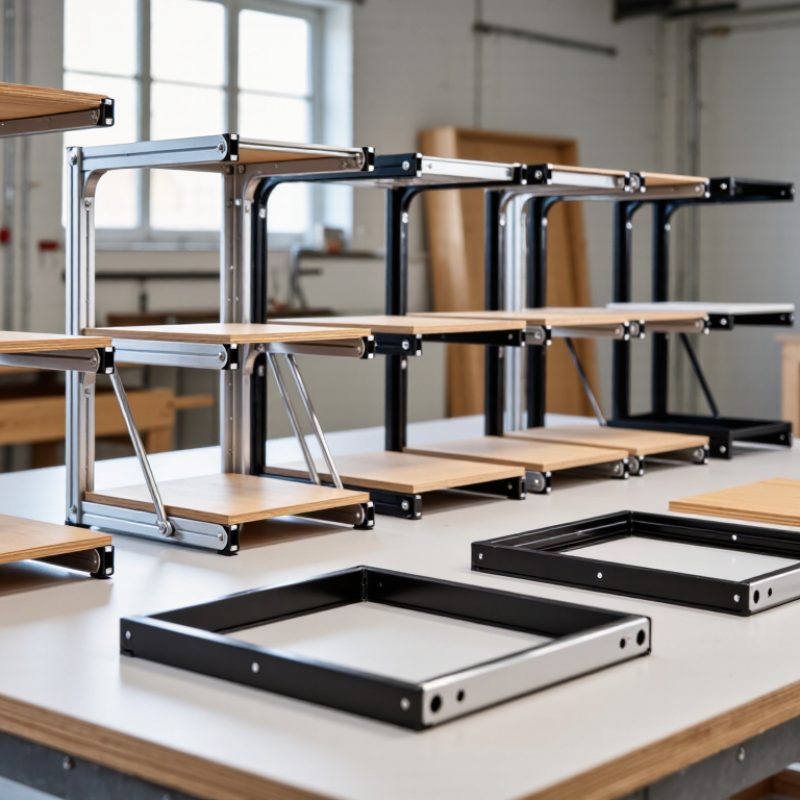
What Are the Top 10 Folding Shelves Manufacturers in China?

Understanding Folding Shelves and Their Main Product Types

Folding shelves are storage surfaces that collapse, pivot, or fold against a wall when unused. Their practical value is clear in narrow kitchens, laundry rooms, workshops, and small retail spaces.

Grand View Research estimated the global furniture market at USD 736.6 billion in 2023 and projected 5.0% annual growth from 2024 to 2030. This broad market figure is not specific to folding shelves, but it shows the larger category’s scale.

Common types include wall-mounted drop-down shelves, freestanding folding racks, and bracket-supported shelves. Drop-down models save floor space; check that the hinges lock firmly before placing items on them. Freestanding racks suit temporary storage and can often be moved between rooms. Bracket-supported designs offer a stable surface, though their wall fixings must match the wall material.

Small detail. Big consequence.

Materials also shape use: steel frames handle heavier loads, while timber or engineered boards provide a warmer indoor finish. Capacity varies by design. Read the stated load limit, and do not assume every shelf can support the same weight.

One weakness in this grouping: products often combine these features, so “type” alone cannot tell you how sturdy a shelf will feel in daily use.

Key Criteria for Evaluating Chinese Folding Shelf Manufacturers

When comparing folding shelf manufacturers, assess the product and the process behind it. Ask for drawings that specify steel thickness, hinge geometry, finish, and rated load. Request test records showing how shelves perform under stated loads and repeated folding. A single attractive sample proves little. Small details matter.

China produced about 1,005 million tonnes of crude steel in 2024, according to the World Steel Association’s World Steel in Figures 2025. That scale signals a deep materials supply base, not consistent shelf quality. Check whether the manufacturer traces incoming steel to batches and controls coating thickness, welds, and hinge alignment. Ask for factory inspection records and confirm any quality certificates cover the actual production site and relevant processes. The ISO Survey 2022 reports more than one million ISO 9001 certificates in China; certification alone does not verify a specific folding shelf. Ask for recent corrective-action records, sample inspection results, and agreed tolerances. A rushed audit can miss a weak hinge. It happens. Compare lead-time promises with production capacity and verify packaging protects corners during transit. One awkward point: the lowest quote may exclude the testing needed to support its load claim.

Top 10 Folding Shelves Manufacturers in China

A practical review of the top 10 folding shelves manufacturers in China should look beyond catalogue photos. Compare product range, material options, production capacity, and experience with export orders. A reliable supplier can explain how shelf thickness, hinge design, and wall-mounting hardware affect load stability. Ask for drawings and clear load-test details. Small details matter.

Samples help reveal what specifications may miss. Check whether the shelf folds smoothly, sits level, and has clean welds or evenly finished edges. Measure the packed unit, too; bulky packaging can raise shipping costs. Ask how the manufacturer checks dimensions and surface quality during production. Requesting a sample from the same production line can make the comparison more meaningful.

A top-ten shortlist is useful, but rankings vary by product type and buyer needs. One factory may suit compact household shelves, while another handles heavier storage designs. Review written quotations, sample quality, lead times, and communication before deciding. A polished catalogue is not proof of consistent production. I would also leave room for a second inspection; specifications can still be unclear, and that is worth questioning.

What Are the Top 10 Folding Shelves Manufacturers in China? - Top 10 Folding Shelves Manufacturers in China

The table below compares ten common folding-shelf product specialties for supplier evaluation. These are product categories, not named or ranked manufacturers; specifications vary by model and should be confirmed with each supplier.

No. Folding Shelf Specialty Typical Materials Common Applications Key Specifications to Confirm Useful Supplier Checks
1 Wall-mounted folding shelf Steel brackets with wood, metal, or plastic shelf panels Kitchens, laundry rooms, workshops, and compact spaces Panel dimensions, bracket material, folded projection, and rated load Request load-test details and wall-fixing requirements
2 Freestanding folding rack Powder-coated steel or aluminum tubing with metal or plastic shelves Home storage, retail displays, and temporary storage Open and folded dimensions, number of tiers, wheel options, and load per tier Check stability, locking features, and assembly instructions
3 Heavy-duty workshop shelf Structural steel frame and steel shelf panels Garages, workshops, and utility areas Steel thickness, reinforcement, load rating, and coating specification Ask how the stated capacity was tested and whether it is per shelf
4 Stainless-steel folding shelf Stainless-steel brackets and shelf surface Kitchens, food-service areas, and damp environments Steel grade, surface finish, dimensions, and rated load Verify the material grade and request documentation for the supplied product
5 Plastic folding shelf unit Molded plastic components, sometimes with metal supports Household storage, light-duty utility use, and temporary displays Resin type, dimensions, UV exposure guidance, and load per tier Check hinge durability and performance under the intended temperature conditions
6 Bamboo or wood folding shelf Wood or bamboo panels with metal hinges or frame components Home organization, bathrooms, and decorative storage Panel thickness, finish, moisture guidance, and folded dimensions Review samples for finish consistency, joints, and hinge operation
7 Over-the-door folding shelf Metal frame or wire shelves with hooks and folding joints Bedrooms, bathrooms, and pantry storage Door clearance, hook dimensions, shelf spacing, and load rating Confirm compatibility with the target door thickness and trim
8 Folding wire shelf rack Steel wire shelves with a folding metal frame Pantries, garages, retail backrooms, and storage areas Wire diameter, shelf spacing, coating, and assembled dimensions Inspect welds, coating coverage, and frame locking mechanisms
9 Portable event or display shelf Lightweight metal or plastic frame with removable panels Exhibitions, pop-up retail, and temporary events Packed size, setup time, shelf count, and carrying-case availability Request a packed sample and check repeated folding performance
10 Custom-size folding shelf system Material selected to order, commonly steel, aluminum, wood, or plastic Project-specific retail, residential, and commercial installations Drawings, tolerances, finish, packaging, and approved load requirements Confirm prototype approval, tooling costs, lead time, and quality-control plan

Comparing Manufacturers by Products, Materials, and Customization

A useful top-ten comparison should examine shelf design, materials, and customization—not catalog size alone. China’s National Bureau of Statistics reported that furniture manufacturers above designated size earned RMB 655.7 billion in 2023, down 4.4% year on year. This broad industry figure offers context, not proof of folding-shelf quality. Compare wall-mounted and freestanding models separately: their brackets, hinge loads, and installation needs differ. Small details matter.

Material choice changes weight, finish, and service life. Steel shelves suit higher load demands, while aluminum can reduce weight; wood-based panels may offer a warmer appearance but need careful edge sealing. Ask manufacturers for material specifications, rated-load test results, and hinge-cycle data. ISO 7170 provides test methods for storage-unit strength, durability, and stability. For custom orders, compare available dimensions, coating colors, bracket layouts, packaging, and sample approval steps. Grand View Research valued the global furniture market at US$677.09 billion in 2023, but that market-wide estimate does not isolate folding shelves. Treat it as demand context, not a product forecast. A quotation can look complete and still omit the test conditions behind its load rating; verify those details before comparing suppliers.

Top 10 Folding Shelves Manufacturers in China? — Material Benchmark

Typical density of materials commonly used in shelving. Values are approximate and vary by grade and product; this is a material comparison, not a manufacturer ranking.

Steel offers high density and strength, while aluminum is lighter. Engineered wood materials such as plywood and MDF are substantially less dense. Product suitability also depends on design, finish, load rating, and customization.

Choosing a Manufacturer for Your Business Needs

Choosing a folding-shelf manufacturer starts with the job the shelf must do. A unit for a pantry has different demands from one used in a busy workshop. Share the intended load, open-and-close frequency, wall type, and available space. Ask whether the quoted capacity applies to one shelf or the whole unit. Small details matter.

Request a production sample, not just a polished display piece. Check that hinges move smoothly, locking parts engage fully, and edges feel safe to handle. If possible, test the shelf with a measured load and inspect it again after repeated folding. Ask how the factory checks welds, coating thickness, dimensions, and packaging. Clear inspection records are more useful than broad claims about quality.

Price is only one part of the decision. Compare minimum order quantities, sample charges, production lead times, and replacement-part support. Ask how changes to drawings are approved and how defects are handled. One uncomfortable point: a low quote can hide thin packaging or vague specifications. I would also pay attention to response quality; a supplier who answers practical questions clearly is easier to work with, though that alone cannot prove reliable production. Get key requirements in writing before placing an order.

FAQS

What should I compare when choosing a folding-shelf manufacturer?

Compare shelf design, materials, customization, and inspection records. Catalog size alone tells little. Small details matter.

Are wall-mounted and freestanding shelves comparable?

Not directly. Their brackets, hinge loads, and installation needs differ, so compare each type separately.

Which materials suit different needs?

Steel can support higher loads, while aluminum can reduce weight. Wood-based panels look warmer but need careful edge sealing.

How can I check a shelf’s rated capacity?

Ask for material specifications and load-test results. Confirm whether the rating applies to one shelf or the whole unit.

What should I inspect in a production sample?

Open and close it repeatedly. Check smooth hinges, fully engaging locks, safe edges, and any changes under a measured load.

Which custom-order details should I confirm?

Confirm dimensions, coating colors, bracket layouts, packaging, and sample approval steps. Keep drawing changes in writing.

How should I compare supplier prices?

Compare minimum order quantities, sample charges, lead times, and replacement-part support. A low quote may omit sturdy packaging or clear specifications.

What inspection records are useful?

Ask how the factory checks welds, coating thickness, dimensions, and packaging. Clear records are more useful than broad quality claims.

Do furniture-market figures predict folding-shelf demand?

Not reliably. Industry figures provide context, but they do not isolate folding shelves. I might be giving those numbers too much weight.

Conclusion

This article explores the main types of Folding Shelves, including differences in design, intended use, load capacity, and installation. It also outlines the key criteria for evaluating manufacturers in China, such as production capability, material quality, workmanship, quality-control processes, customization options, communication, and delivery reliability. These factors can help buyers assess suppliers beyond price alone and identify products suited to their storage requirements.

The article presents ten manufacturers for comparison and considers how their product ranges, materials, and customization services may differ. It also explains how to match a manufacturer to specific business needs, whether the priority is a standard design, tailored dimensions, a particular finish, or consistent supply for larger orders. By comparing these considerations, readers can make a more informed choice and select a manufacturing partner that aligns with their product specifications, budget, and purchasing plans.

Henry

Henry

Henry is a dedicated marketing professional with a profound expertise in the company's offerings. With years of experience in the industry, he possesses an impressive understanding of the market dynamics and consumer behaviors that drive success. Henry is committed to sharing his insights through......